3 Fun & Easy Ways to Teach Your Preschooler Shapes (+ Free Week of Learning!)
As a former elementary teacher, I know firsthand that some of the best learning happens when children don’t even realize they’re learning. Shapes are one of those foundational skills that can easily become repetitive, but they don’t have to! Whether you’re looking for a quick activity to squeeze into your day or a full week of shape-focused learning, these three ideas make practicing shape recognition fun, hands-on, and engaging.
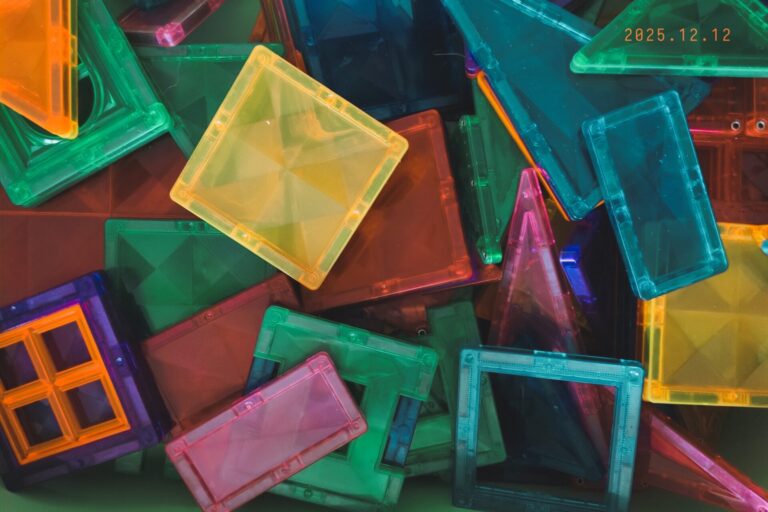
1. Hide-and-Seek with Magna-Tile Shapes
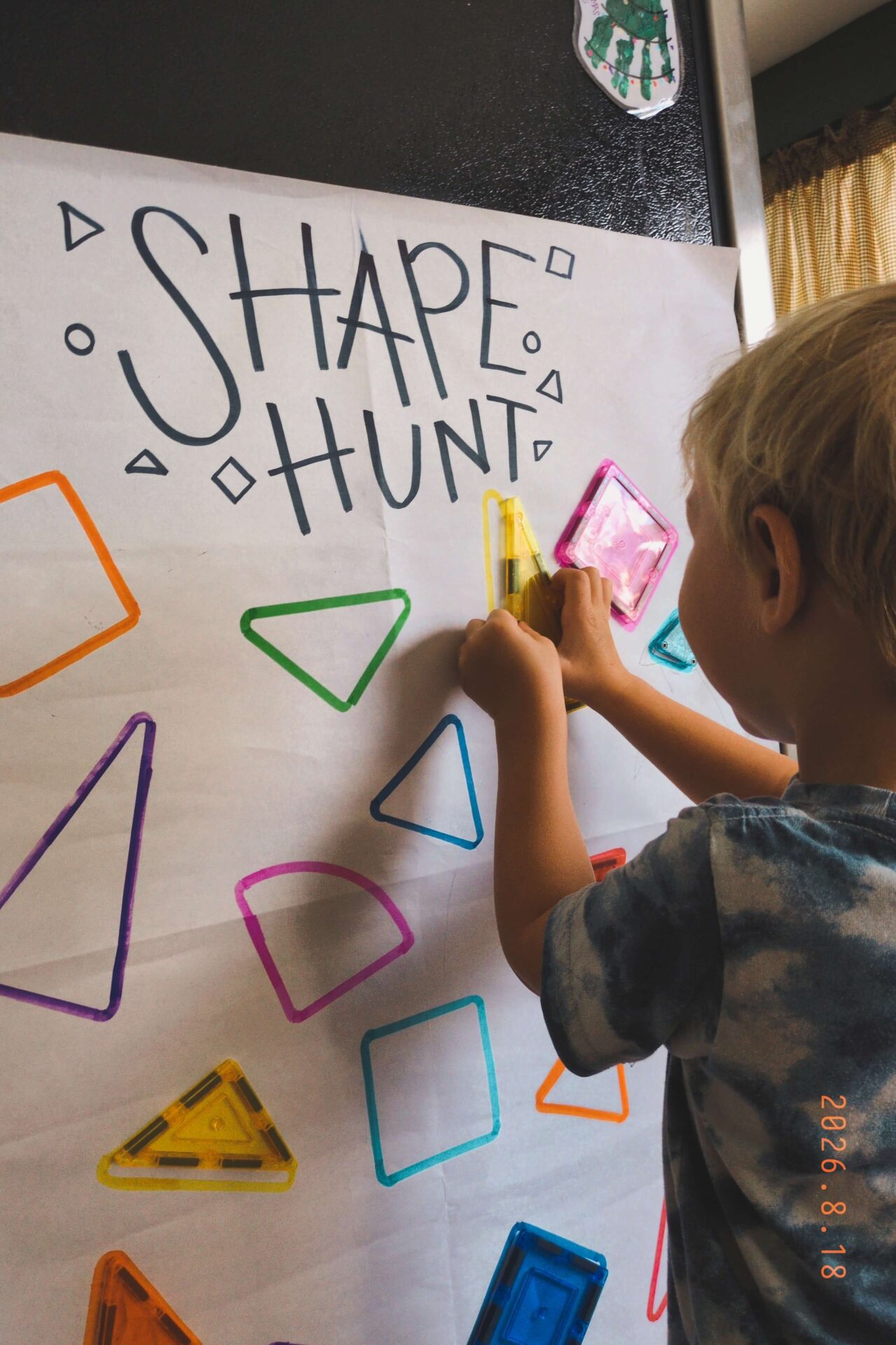
This activity is super easy and doesn’t require many materials. Plus, it’s easily adaptable to your child’s age range! You could add more shapes, take some off, hide them in more challenging spaces, etc. Here’s how to set up this simple shape naming activity:
- Gather materials: You’ll need a large sheet of paper, Magna-Tiles, and markers.
- Trace: Pick out some tiles that are unique (meaning don’t accidentally only grab squares 😅) and trace the outside of those tiles using their matching color. Set those traced Magna-Tiles aside so they don’t get lost.
- Post it: Post your paper somewhere magnetic – like the fridge, dishwasher, or washing machine!
- Distract: While your preschooler isn’t looking, hide the set Magna-Tiles around the house.
- Let the search commence!
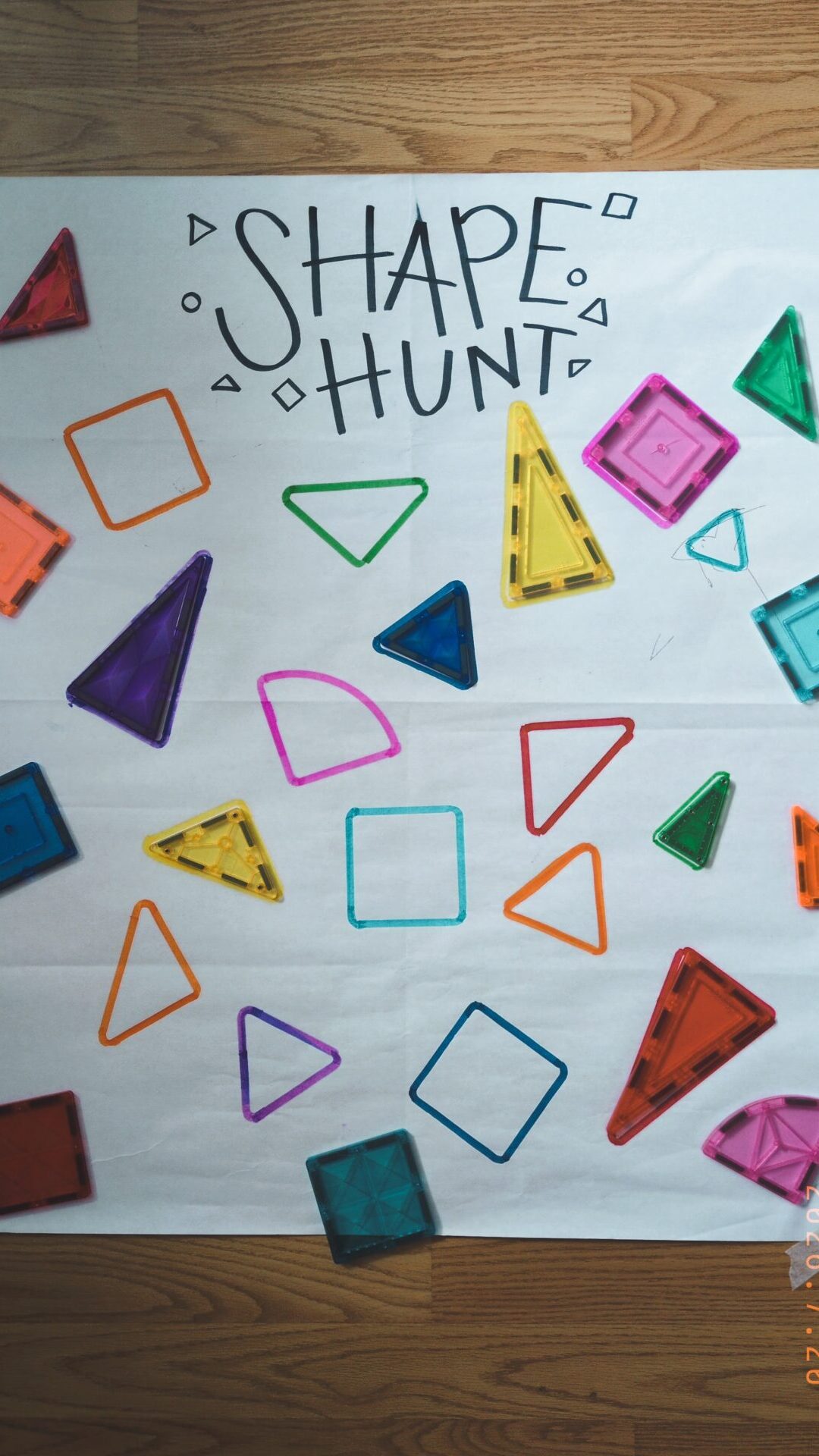
As they find the shapes, make sure they are naming each shape as they bring it back. This will help them remember common shape names, like squares, rectangles, and triangles, while also practicing color naming! “I found a BLUE SQUARE!”
This activity is super easily repeated as well, so your little one can continue to grow their confidence in naming shapes! You can ask follow up questions, like “How did you know that one was a square?” to keep the learning going, even after the game is over.
2. Squish & Build Shapes with Play-Doh
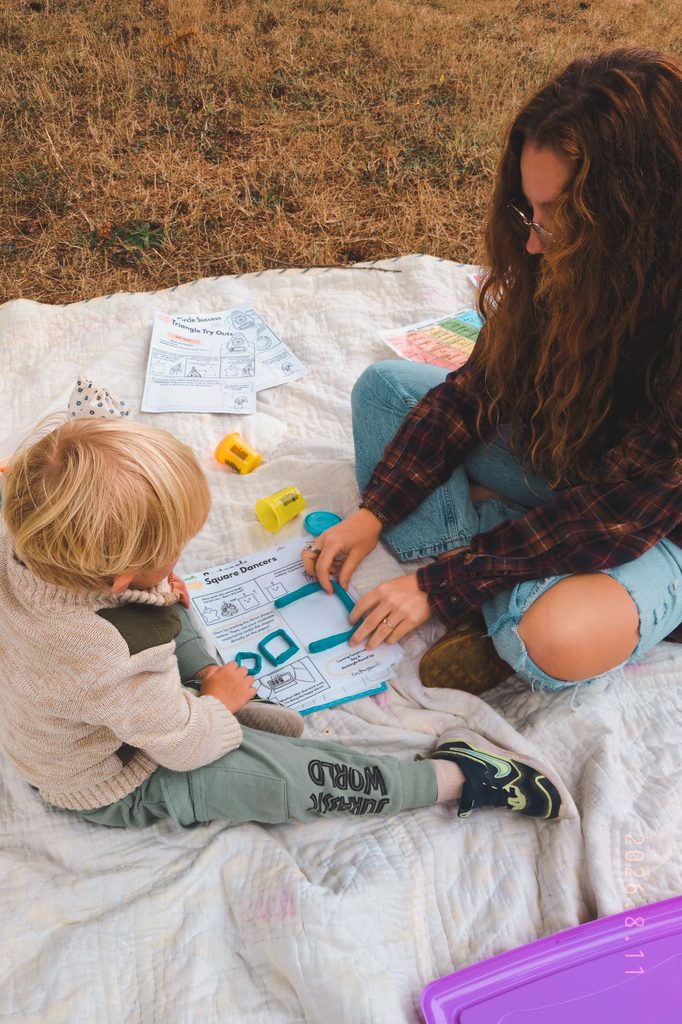
Having your little one make the different shapes you are learning is another great way to incorporate movement while building those differentiating factors.
Using Play-Doh or kinetic sand is a child-friendly way to get them building and molding shapes like: circles, triangles, squares, rectangles, and pentagons. Plus, you can guide them through those shape-specific features!
“You’re doing a great job making a triangle, you made the 3 sides and 3 angles so well!”
If you’re looking for a way to structure that tactile shape-building time, I’ve got a free week of learning that uses this same foundation! It’s 5 days of story driven learning, using minimal supplies and movement incorporated into each lesson. Check it out below!
3. Potato Stamp Shapes
This is another super simple activity that came about from seeing my potatoes grow old on the counter… 🥔Here’s how I turned sprouting potatoes into a shape-centered art project:
- Gather materials: You’ll need 5 small potatoes, or 2.5 regular sized potatoes, a knife, paper, and paints.
- Cut the shapes: Cut your potatoes in half. Then cut the shapes into your potato where you just cut, about 1/8 of an inch down. Cut the side pieces off to reveal your shape protruding through the potato (circle, triangle, square, rectangle, and pentagon.)
- Set up your paint: Put a few different colors of paint on a flat surface, like a paper plate, and put your paper next to it.
- Let the stamping begin!
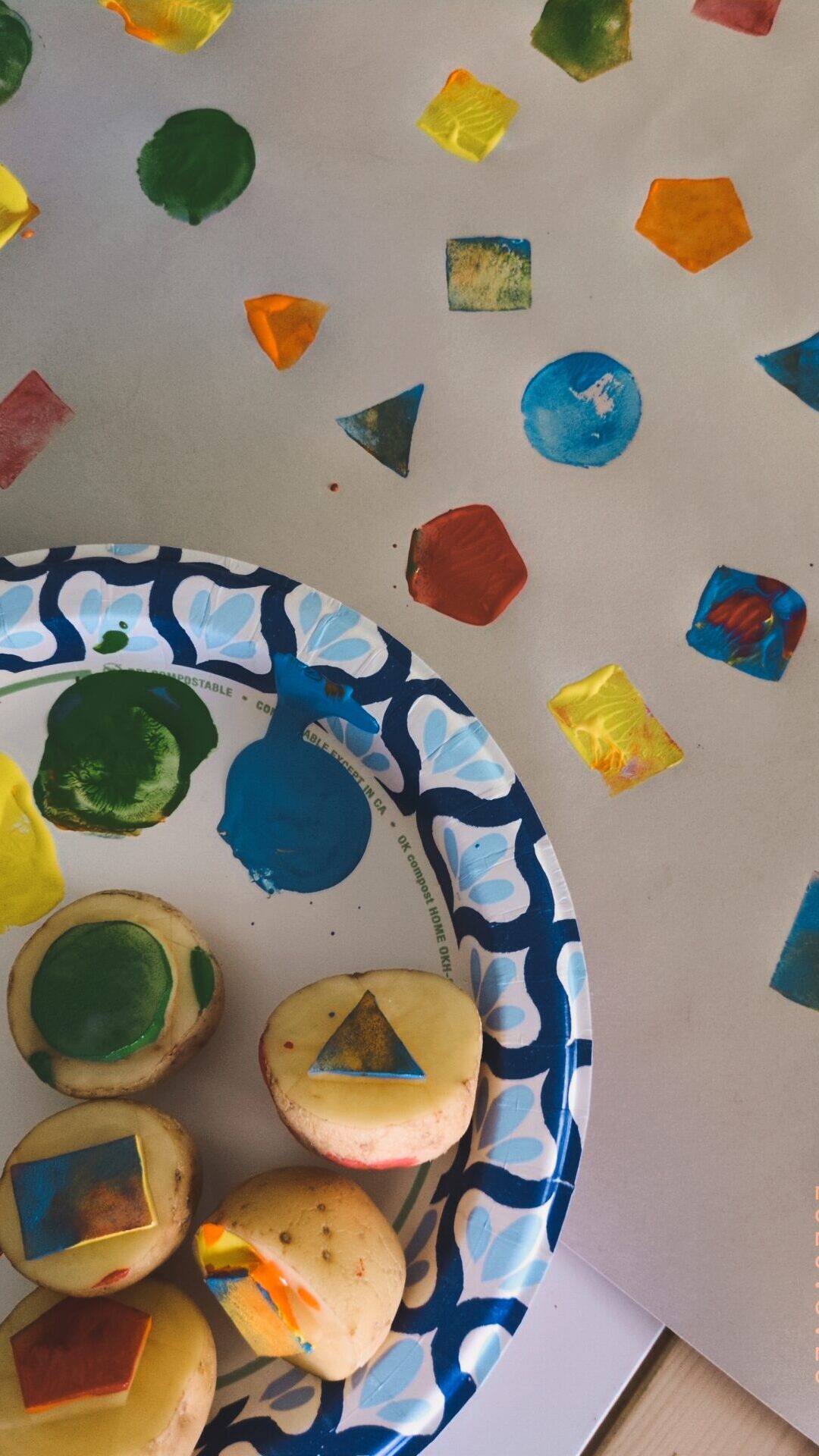
As they stamp to their hearts content, have them name the shapes they see. That will help them remember the attributes of each shape as they stamp!
This is where you can really make this activity your own as well; You could work together to make a pattern of shapes, label one of each shape, or even play a search-and-find game once the paint is dry! “I spy a RED PENTAGON!“
Why Hands-On Shape Learning Works:
Anytime you can make learning look like play, you are going to have greater buy-in from your little learners. Plus, the hands-on nature of these activities helps build real world connections, instead of just memorizing the pictures on a flashcard! Practicing shapes can feel repetitive, but getting kids working with their fine motor skills and incorporating movement will help these ideas feel fresh and new.
Final Thoughts
Learning shapes doesn’t have to mean sitting down with flashcards! With a few simple materials and a little creativity, you can turn shape practice into play, art, movement, and exploration. Whether you try one activity or work your way through all three, I hope these ideas make learning shapes feel a little more fun (and a lot less repetitive!)
❤️ Until next time,